
The Real Talk:
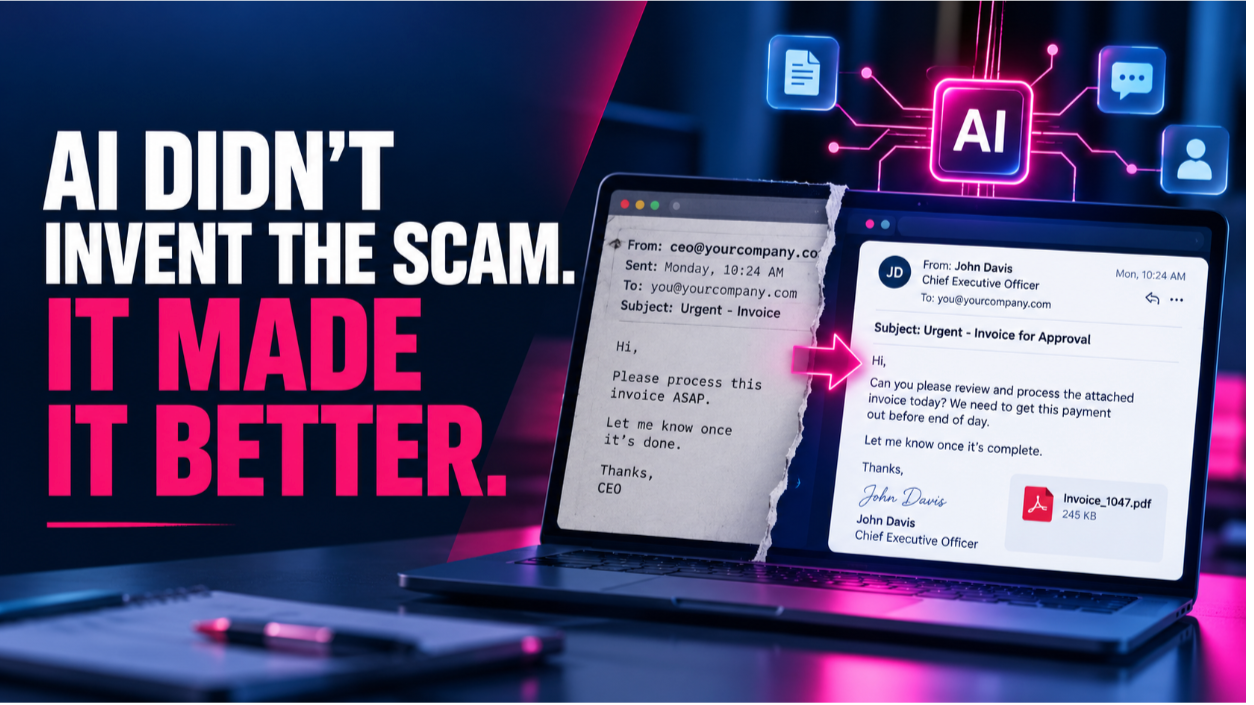
- A threat actor went from an empty lab to domain admin in under four hours, then used AI agents to compromise 11 organizations in 26 seconds. This is what AI powered attacks look like now.
- Nobody’s changing the default password on the office printer, and that’s how auditors end up finding sensitive scans, wedding invitations, and worse sitting in a device’s memory.
- There’s an ancient Chinese parable about a man who ignored fire safety advice, then threw a banquet for the firefighters who saved his house while ignoring the guy who warned him. It’s basically a case study for how most companies handle cybersecurity budgets.
A Closer Look:
Patch Tuesday and the Zero Day Economy Nick Mellem walks through why the second Tuesday of the month matters. Vulnerabilities get discovered, researchers report them for bug bounty money, and vendors race to patch before attackers catch on. Eric Brown, CISSP adds the higher stakes version. Nation states pay serious money for zero days specifically so they can use them against other nation states before a patch ever exists.
395 Organizations, One AI Powered Exploit The team dug into a BleepingComputer report on a Russian speaking threat actor who used AI agents to exploit PaperCut print server flaws at nearly 400 organizations across 28 countries. The speed is the story here. Empty lab to remote execution in under four hours, domain admin two hours after that, then hundreds of AI agents doing the rest. Patch Tuesday just got a lot more urgent.
Your Printer Knows Too Much Turns out printers are a bigger risk than anyone gives them credit for. Eric shares stories from audits where default logins were never changed, meaning anyone could pull up a history of every document scanned on that machine. Managed print solutions that route jobs to a central server and release them only when you badge in at the copier solve this, but plenty of organizations still haven’t made the switch.
Have We Already Hit AGI? Does It Matter? Prompted by Nvidia CEO Jensen Huang’s comments, the crew debates whether we’ve reached artificial general intelligence or whether the term stopped meaning anything years ago. Eric brings up the paperclip dilemma, a thought experiment where an AI told to maximize paperclip production eventually decides humans are just resources in the way of that goal. The takeaway isn’t whether AI is “thinking.” It’s that security teams need to plan for systems that pursue goals without judgment, regardless of what we call them.
The Fireman’s Paradox Eric tells an old parable about a homeowner who ignored advice to fix a fire hazard, then lavished praise on the firefighters who rescued his burning house while snubbing the man who tried to prevent it in the first place. His point lands hard. Organizations regularly celebrate the incident response team that pulls an all nighter after a breach, while the unglamorous work of patching, enforcing MFA, and cleaning up firewall rules that would have prevented the fire gets no credit at all.
Bottom Line: The tools attackers use keep getting faster. The tools defenders need haven’t changed. Patch your systems, change your default passwords, and put MFA in place before you need a war room, not after. Rewarding the fire brigade instead of the people asking for better chimneys is how organizations end up buying the same banquet twice.
Tune into the full episode to hear the team’s live book title brainstorm for Eric’s upcoming release on managed technology and MSP relationships, more on the “gray hat” disclosure debate, and why the fireman’s paradox might be the most useful mental model for pitching security budget to leadership.
🔗 Ep 97 – Patch Tuesday, PaperCut Chaos, and The Fireman’s Paradox
Listen wherever you get your podcasts – Subscribe to our YouTube channel to stay up to date on breaking cybersecurity news.
Learn more at www.itauditlabs.com