
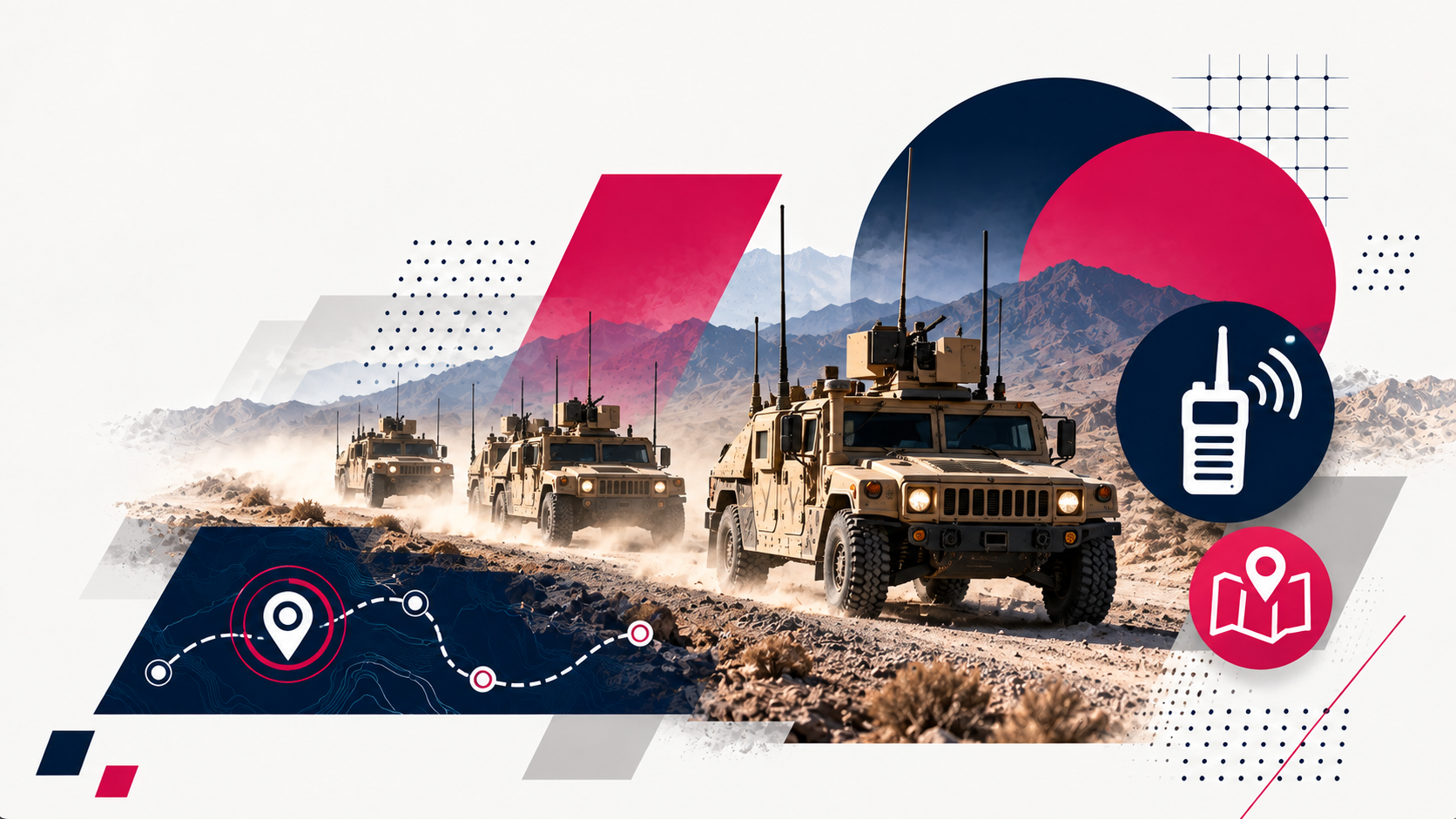
We came up on a convoy sitting still outside Marjah.
Their radios were down. That’s not a place you want to be stopped, and it’s definitely not a place you want to be stopped without comms.
They still had a way to talk, though. They had the Blue Force Tracker in the truck: a screen, digital maps, and text messages. Nobody would call it a replacement for voice comms. But it was enough to reach us and get linked up.
Once we were with them, the problem didn’t take long to find. The timing on their radio was off. That was it. One setting kept a whole convoy from communicating. I set the timing, and traffic went through.
That experience taught me something about business continuity planning that I’ve carried into civilian life: the best backup isn’t always the one that replaces what failed. Sometimes it’s simply the one that keeps you connected long enough to get help.
Key Takeaways
- A backup doesn’t need to be a perfect replacement. It just needs to keep your business connected until help arrives.
- Small problems can create major disruptions. A missing login, unavailable employee, or failed system can bring operations to a halt.
- Simple contingency plans make a difference. Documented processes, alternate contacts, and shared knowledge can prevent unnecessary downtime.
- Business continuity starts with preparation. Identify your biggest single point of failure and establish a practical way to keep moving when something breaks.
What Actually Saved Them
The fix was simple. But the fix isn’t what kept that convoy from being truly stranded. What kept them in the game was a backup that was worse than the primary in almost every way, and still good enough to bring help.
Every one of us learned PACE. A lot of us stopped using it the day we got out.
When owners think about backups, they picture duplicates. A second person who can do everything your ops lead does. A second vendor already under contract. A second system running in parallel. That sounds expensive, so it goes on the someday list. Meanwhile, the business runs on a single primary for everything.
Then something small breaks. It’s a login only one person knows, or a renewal nobody tracked, or the one employee who understands billing is out for two weeks. And the whole convoy stops.
Usually the cause is no more dramatic than a radio with the wrong time. It’s small, boring, and fixable. The danger isn’t the size of the problem. The danger is having no way to reach the person who can fix it.
Business Continuity Starts With Staying Connected
The Blue Force Tracker couldn’t do what the radio did. It didn’t need to. It just needed to keep them connected long enough for someone who knew where to look to get there.
That’s the standard I use now. I don’t ask whether we have a full replacement for every critical piece of the business. I ask a smaller question: if this goes down tomorrow, do we still have a way to reach the people who can fix it?
Sometimes the answer is a one-page write-up of how a process works. Sometimes it’s a second person who knows the basics but not the whole job. Sometimes it’s a phone number written down somewhere other than the system that just failed. None of it is elegant. All of it is cheaper than sitting still in a bad spot.
There’s a people side too. Someone in that convoy could have known to check the timing. Spreading a little know-how across your team is its own kind of alternate. It’s what turns a stall into a quick fix.
The Pause Point
Pick the one thing in your business that would stop everything if it went quiet tomorrow. It could be a person, a client, a system, or a vendor.
What’s your Blue Force Tracker for that one? I don’t mean the perfect backup. I mean the one that gets you to help.
Thanks for pausing with me. If any of this connects to what you’re dealing with, you can find more of what we do at itauditlabs.com.
Common Questions Asked
Business continuity planning is the process of preparing an organization to maintain essential operations during unexpected disruptions. It involves identifying critical people, systems, and processes and establishing alternative ways to keep the business functioning.
Small businesses often depend on a handful of key employees, vendors, or systems. When one becomes unavailable, operations can quickly stall. Having simple backup procedures helps minimize disruptions and keeps the business moving while the issue is resolved.
PACE stands for Primary, Alternate, Contingency, and Emergency. Originally used in military communications planning, this framework establishes multiple ways to maintain essential functions when the preferred method fails. Businesses can apply the same approach to communication, staffing, technology, and critical operations.
Simple backups can include documenting important processes, cross-training employees, maintaining emergency contact lists, identifying alternate vendors, and ensuring more than one authorized person can access critical business systems.
A single point of failure is a person, system, vendor, or process that could disrupt operations if it becomes unavailable. Identifying these vulnerabilities helps businesses prepare practical alternatives before a disruption occurs.
Not always. Some organizations need sophisticated recovery systems, but many continuity improvements are relatively inexpensive. Documenting procedures, sharing knowledge, and establishing alternate communication methods can significantly improve a business’s ability to respond to disruptions.