
AI Didn’t Invent the Scam. It Made It Better.
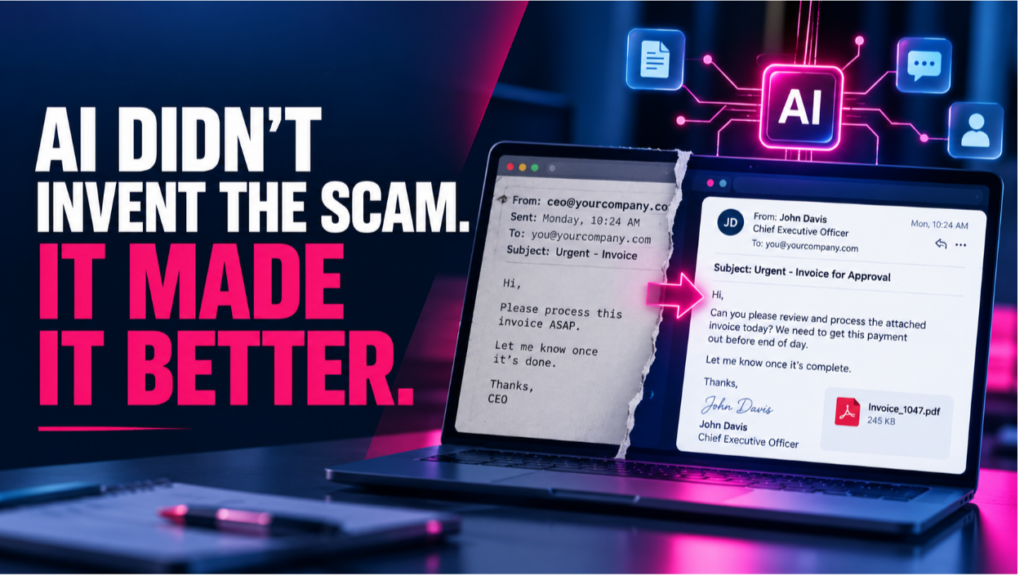
Key Takeaways For years, we’ve been teaching people how to recognize a scam. Look for the poorly written email. Watch for the strange wording. Be suspicious of the message that doesn’t quite sound like your CEO. Double-check the invoice that looks a little off. Those were useful clues. AI is making many of them less […]
You Don’t Have an IT Problem. You Have a Gap Problem.

A CFO told me last month that IT was handled. They had a guy. He’d been there nine years, knew everything, never complained. So I started asking questions. Who handles the cyber insurance questionnaire? “The broker fills that out.” Who runs the backups? “There’s a company that does that.” Who patches the laptops? “Our guy […]
Your Email Gateway Never Saw It Coming
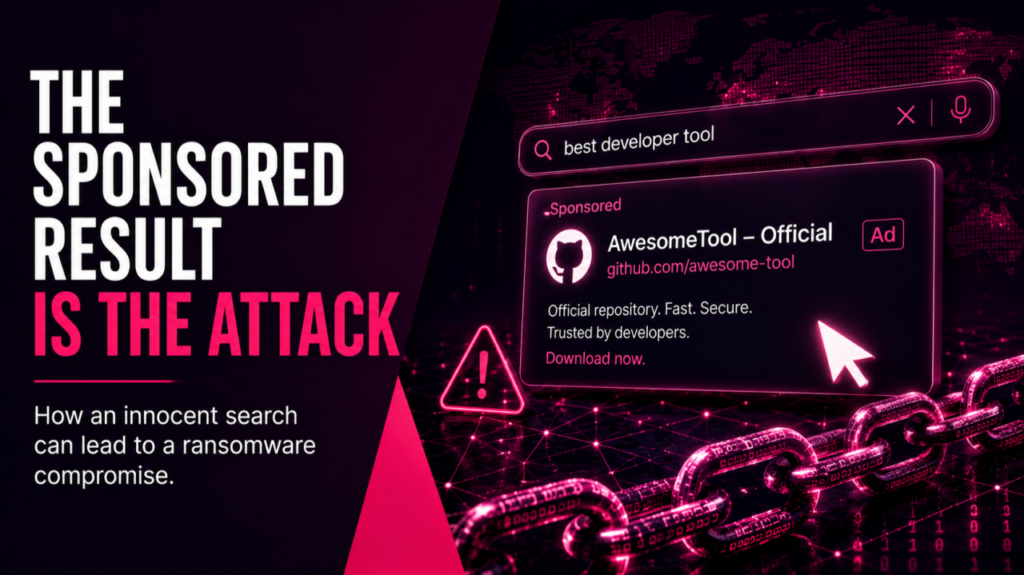
How an innocent Google search can become tomorrow morning’s ransomware incident. Your security awareness program has spent years teaching employees to be suspicious of phishing emails. That’s still important. But what if there isn’t an email? Imagine one of your engineers needs a new developer tool. They open Google. Type the product name into the […]
The Most Important Person on My Flight Wasn’t on the Airplane

The Handoff I was alone in the cockpit, flying myself through a line of thunderstorms, when I realized I was trusting a complete stranger with something incredibly important. I’d never met them. I probably never will. Yet for the next twenty minutes, I trusted them completely. That realization changed the way I think about trust. […]
The Ransomware That Still Needed a Human
Every few months, cybersecurity gets a new “first.” The first AI worm. The first autonomous attack. The first fully AI-powered ransomware. Headlines move fast. Reality usually takes a little longer. That’s exactly what happened last week. Early reports suggested researchers had documented the first truly agentic ransomware—an AI system capable of compromising a network, moving […]
Loop Prompting: A Technique for Getting More Out of LLMs

Most practitioners run one prompt, read the output, and move on. For drafting emails or summarizing a document, that is fine. For anything that requires actual analytical depth, it is the wrong approach. A single LLM pass gives you the first reasonable answer, not the best one. Loop prompting is how you fix that. What […]
The Numbers Behind the Curtain

A few weeks ago I flew myself down to Orlando for CoachCon 2026, a two day gathering of entrepreneurs built around a single idea: thinking about thinking. Dan Sullivan hosted. The keynotes came from Angus Fletcher, author of Primal Intelligence, and Alison Levine, team captain of the first American Women’s Everest Expedition. I planned to […]
The Vanishing Buffer

An hour over a Colorado pass, a sentence in a Google ballroom, and the disappearance of the one thing every previous technology revolution quietly handed us: time Pueblo, Colorado. Hours before sunrise. To the west, the mountains we would have to cross were still dark on dark, more shape than range. A slight breeze worked […]
Harmony, Abnormal, Proofpoint: What Matters In Email Security
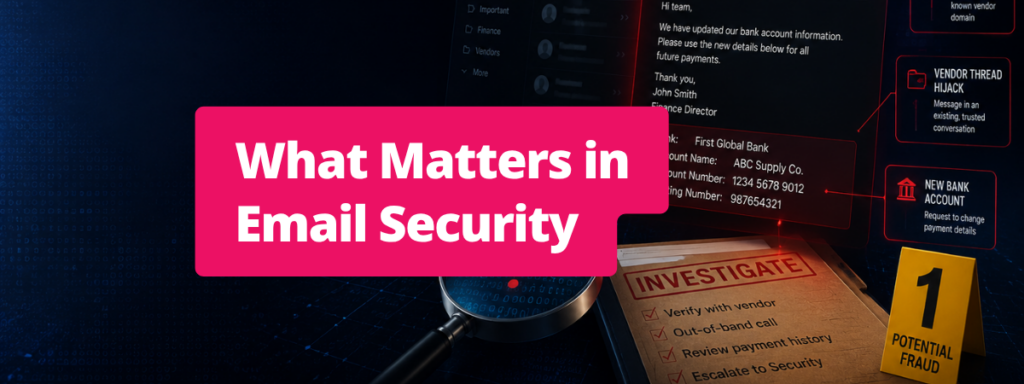
Most email security products are about as effective as eating spaghetti with a spoon. I have used quite a few. Three stand out. That number may shrink or expand because security tools change and evolve constantly. A firewall product that led the market twenty years ago should not be anywhere near a data center today. […]
What The FCC Router Ban Means For Security Leaders

Why This Matters Most teams treat consumer routers as commodity hardware. The FCC’s latest move challenges that assumption — blocking new foreign-made consumer routers from U.S. markets on national security grounds. The rationale is credible. State actors like Volt Typhoon have used small office and home office routers as staging points for intrusion, surveillance, and […]