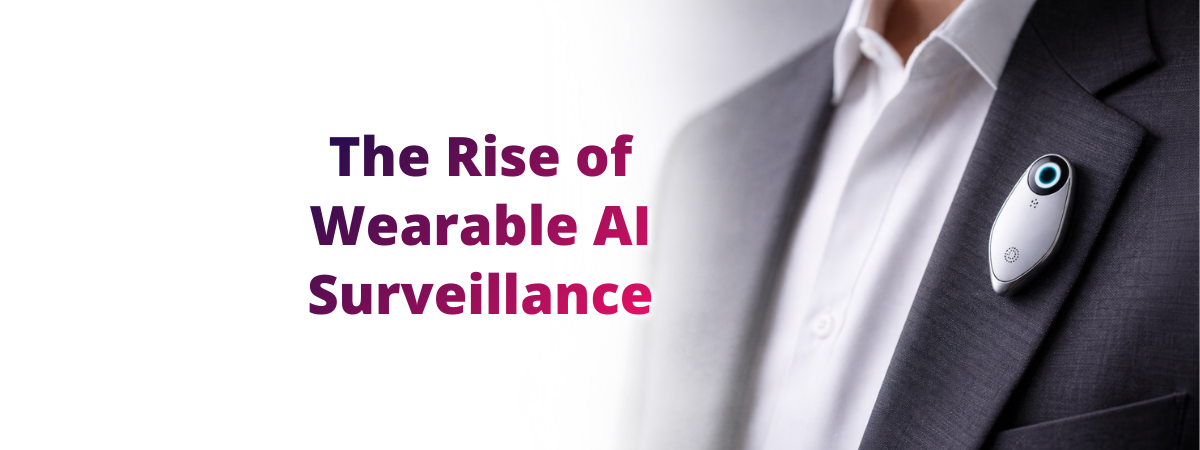
A phone is an obvious recording device. A wearable pin is engineered to be frictionless and socially normal. That shifts risk in ways many meeting norms and acceptable use policies were never built for.
When collection becomes passive, users do not need to decide to “record.” In some homes, automation assistants from Amazon or Google have become accepted, despite evidence that these devices are processing conversation even without the wake word being used. Other “smart” devices like TVs and robotic vacuums are recording without consent.
Wearables change the dynamic by bringing an always-on recording device into our conversations. Sure, we have evidence that applications on our mobile devices are continually recording, but the wearable pin introduces a new paradigm — not a passive, surreptitious listener, but an active participant in our conversations. When we actively wear and rely on an AI recording device, it becomes part of our memory.
I wore a Rewind AI — renamed Limitless — recording device for a few months, prior to the Google sale and subsequent discontinuance of the product. Apparently the “lifetime” license was good for about a year. My experience was generally positive. I wore it after hours and on the weekends, so as to not infringe on any of my client confidentiality agreements. I recall leveraging it one time to recall the name of a stereo store employee that I had spoken with over the phone. The device could only hear my side of the conversation, but since I had repeated the person’s name I was able to go back and search the one-sided transcript of our call. In general, the summary and search feature of the mobile app was too slow, in my opinion, to be useful. Had it been a ChatGPT-like experience, I would have leveraged it more.
Adapting to Being a Surveilled Society
Without sounding dystopian, humans in modern, technology-advanced societies are constantly under surveillance today from a variety of sources, not limited to satellites, traffic cameras, security cameras, doorbell cameras, vehicle cameras (inside and out). The question we need to ask ourselves is: is adding a personal camera/recording device managed in a unified ecosystem more helpful to you than not? In either case, we’ll vote with our dollars. Humane AI Pin made an attempt a few years ago and failed. The processing was slow, the device and subscription fees were too high, and it had bad battery life.
If Apple’s solution is going to be seamless and integrated into the Apple ecosystem, it will likely be a hit. iPhones do not have a step gain in technology change year after year, but yet they sell or manufacture more than 6 per second.
Wearable AI is an untapped market.
Due Care & Due Diligence to Reduce Risk at Scale
The central risk is not the raw recording. It is the creation of a new, durable record that did not previously exist.
A transcript of a product roadmap meeting is functionally equivalent to the meeting recording for an attacker. It is also far more searchable, easy to copy, and easy to forward. A one-page summary of customer pricing strategy is even worse in some cases because it removes the noise and preserves the intent.
This is why wearable pins feel different from “someone might record a meeting.” They turn normal workplace conversations into an asset class: compact, queryable, and portable.
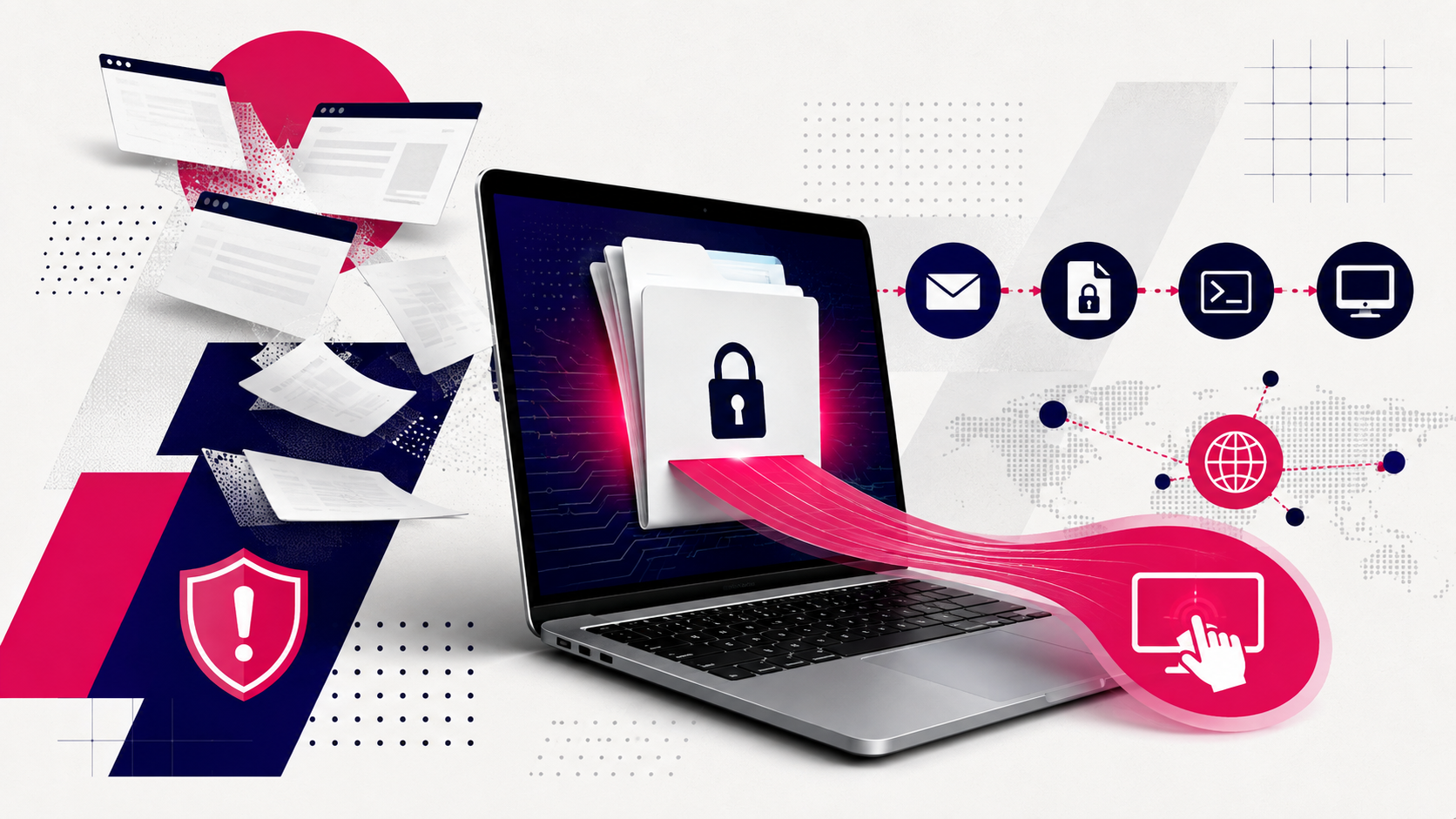
Transcripts often persist even when vendors claim raw audio does not. Security teams get surprised by this because “not storing recordings” sounds safe until you realize the transcript is the sensitive object.
Identity linkage is usually personal, not corporate. Wearables are typically bound to a personal Apple ID or Google account, not an enterprise identity. That creates immediate friction for legal hold, eDiscovery, incident response, and offboarding. If the record of a sensitive meeting lives in an employee’s personal cloud account, your ability to investigate and contain is limited even if the meeting happened on your premises.
This is also where the vendor and subprocessor question shows up. A subprocessor is a third party a vendor uses to process your data. Reporting has suggested Apple may outsource significant AI functionality to Google. If that is accurate, the risk boundary shifts overnight: you are not just evaluating Apple’s posture, you are evaluating the end-to-end processing chain and whatever it becomes over time.
The 23andMe situation is a useful parallel. People trusted a company with uniquely sensitive data based on its posture at the time. Later, ownership and incentives changed. The data did not change. Control of it did. Ambient wearables accelerate that lesson because they generate sensitive artifacts continuously.
The obvious scenario is someone intentionally recording a sensitive conversation. The common scenarios are more mundane:
- A manager uses the pin to “summarize” performance conversations. Now sensitive HR content exists as a searchable artifact in a consumer cloud account with unclear retention.
- A sales rep walks through a whiteboard session and the pin captures customer pricing strategy in the background.
- A developer asks the assistant for help with an error and inadvertently shares API keys displayed on a screen.
Even if you have meeting rules, these devices also collect bystander data. People who never consented, and may not even work for you, get pulled into the ambient stream.
Most organizations already struggle to control meeting recordings in enterprise tools like Zoom or Teams. Wearables decentralize capture to individuals, and they export the records to ecosystems you do not administer.
The Boundaries Worth Setting Now
Trying to ban the technology outright is usually a short-term move. The durable strategy is to make your organization resilient to ambient capture, starting with where derived artifacts are allowed to exist and who governs them.

A practical starting set:
Update incident response for transcript leakage: assume the first “leak” is a summary or transcript in a consumer account, not a stolen laptop. Plan for what evidence you can and cannot get.
Write wearable-specific policy: define where recording-capable wearables are prohibited (HR, legal, finance, customer briefings, secure labs), and make “AI summaries” part of the definition, not a loophole.
Designate no-capture spaces: treat certain conference rooms like badge-controlled areas, with signage and norms that make compliance socially enforceable.
Demand a real data flow answer from vendors: where do audio, video, transcripts, and summaries go; what is retained; what can be deleted; and is any of it used for model improvement.
Decide your identity stance: if a device cannot be bound to a managed identity and governed like a corporate endpoint, be explicit about where it cannot be used.
The goal is not perfection. It is to avoid being surprised when a normal meeting generates a permanent record outside your systems, under terms your organization never negotiated.
The real winners here will ultimately be the entities that manufacture the hard drives, RAM, and compute power needed for audio and video processing at scale, the data centers that process and warehouse this new influx of data, and the company with a unified ecosystem to bring it all to mass market.
Frequently Asked Questions
What are wearable AI recording devices?
Wearable AI recording devices are small hardware products, often worn as pins or accessories, that continuously capture audio and generate searchable transcripts and summaries using artificial intelligence. Unlike traditional recordings, these devices often operate passively and integrate with cloud platforms to store and analyze conversations.
Why are wearable AI devices a cybersecurity concern?
Wearable AI devices can create persistent transcripts of sensitive conversations such as product roadmaps, pricing discussions, HR matters, or technical troubleshooting. These transcripts are searchable, easily copied, and may be stored in personal cloud accounts outside of corporate security controls.
Are transcripts more risky than recordings?
In many cases, yes. Transcripts condense conversations into structured text that is easy to search, copy, and forward. Even if vendors claim they do not retain raw audio, transcripts and summaries may persist and contain the same sensitive information.
Can organizations control wearable AI devices in the workplace?
Organizations can reduce risk by implementing policies that define where wearable recording devices are prohibited, designating no-recording spaces, and requiring corporate identity controls for devices that capture meeting data.
What types of data can wearable AI devices unintentionally capture?
Wearable devices may capture sensitive information such as:
- Customer pricing strategies
- Product roadmaps or intellectual property
- HR or performance discussions
- API keys or technical details displayed on screens
- Conversations involving individuals who never consented to recording
How should companies prepare for wearable AI adoption?
Organizations should update acceptable use policies, evaluate vendor data flows, define retention and deletion requirements, and update incident response plans to account for leaked transcripts or summaries stored in consumer cloud accounts.
Are wearable AI devices likely to become common in the workplace?
Many experts expect wearable AI technology to grow rapidly as devices integrate more tightly with platforms like Apple or Google ecosystems. As adoption increases, organizations will need governance frameworks that assume ambient capture may occur in everyday meetings.