The Real Talk:
- Why law enforcement’s slow adoption of AI mirrors their rocky relationship with social media 15 years ago — and why the stakes are now exponentially higher
- How AI-generated deepfakes are devastating teenagers through sextortion, and why criminals are outpacing the officers trying to stop them
- The uncomfortable truth about your AI chat history: it’s not privileged, it’s not private, and the feds are already using it against people in court
- Why authenticity is about to become the most valuable currency of the next decade — and what public safety agencies must do to protect it
A Closer Look:
The Social Media Playbook, Repeating Itself Braden Frame spent years helping law enforcement catch up to social media — a battle that cost departments credibility and community trust before they found their footing. Now he’s watching the same story unfold with AI. The departments that stayed silent during the BLM news cycle learned a hard lesson: in the absence of the truth, rumors become facts. Public safety agencies are once again behind the curve, and the clock is moving a lot faster this time around.
The Sextortion Pipeline Nobody Wants to Talk About At DC’s Police Week, Braden’s team sat in roundtables with officers from across the country describing a new front in an old war. Teenagers are being targeted by criminals who solicit a single photo, then use AI to generate explicit deepfakes — weaponizing the images for ransom and blackmail. Kids have died by suicide from this. Law enforcement knows it’s happening. What they often lack are the tools, training, and legal frameworks to respond at the speed these crimes now occur.
Your AI Chat History Is Not Your Lawyer A real case: a suspect laid out his entire criminal situation to an AI chatbot, asked for legal strategy, and watched federal investigators seize every word of it. No privilege. No protection. Just a detailed confession to a corporate server. As Braden put it, the feds would never have thought to pull someone’s AI chat history six months ago. Now it’s standard practice. The convergence of always-on surveillance, AI personalization, and cloud-stored conversations is creating legal and privacy territory that almost no one — law enforcement included — has fully mapped.
Guardrails Aren’t Optional The episode took a sharp turn into the AI ethics debate when Venice AI came up. Braden’s position was unambiguous: unguarded AI is dangerous, especially in the hands of people who don’t understand what it actually is. His clearest example — a 12-year-old using an iPhone to generate explicit deepfake images of a classmate in 90 seconds — isn’t a hypothetical. It’s already happening in schools. The technology gap between what’s possible and what’s protected is where the real harm lives.
Authenticity as the Last Line of Defense Braden’s closing argument was one of the most compelling of the episode: in a world flooded with AI-generated content, synthetic video, and personalized disinformation, the most powerful thing a public safety organization — or any organization — can do is put real faces and real voices behind their story. Outrage bait is already being manufactured at scale, designed to go viral and erode public trust. The antidote isn’t better PR. It’s verifiable, consistent, human truth.
Bottom Line:
The threats facing law enforcement in the AI age aren’t coming from science fiction — they’re landing in courtrooms, on teenagers’ phones, and in political ad campaigns right now. Braden Frame’s message to public safety and the rest of us: stay loud, stay real, and understand that the story vacuum you leave will always get filled by someone else. The organizations that win this era won’t be the ones with the most sophisticated AI tools. They’ll be the ones people actually trust.
Tune into the full episode to hear Braden’s take on Project NOLA’s surveillance controversy, why he thinks Whisper Flow is the sleeper productivity tool of the year, and what AI-powered spell-check for real-life paramedic decisions could actually look like.
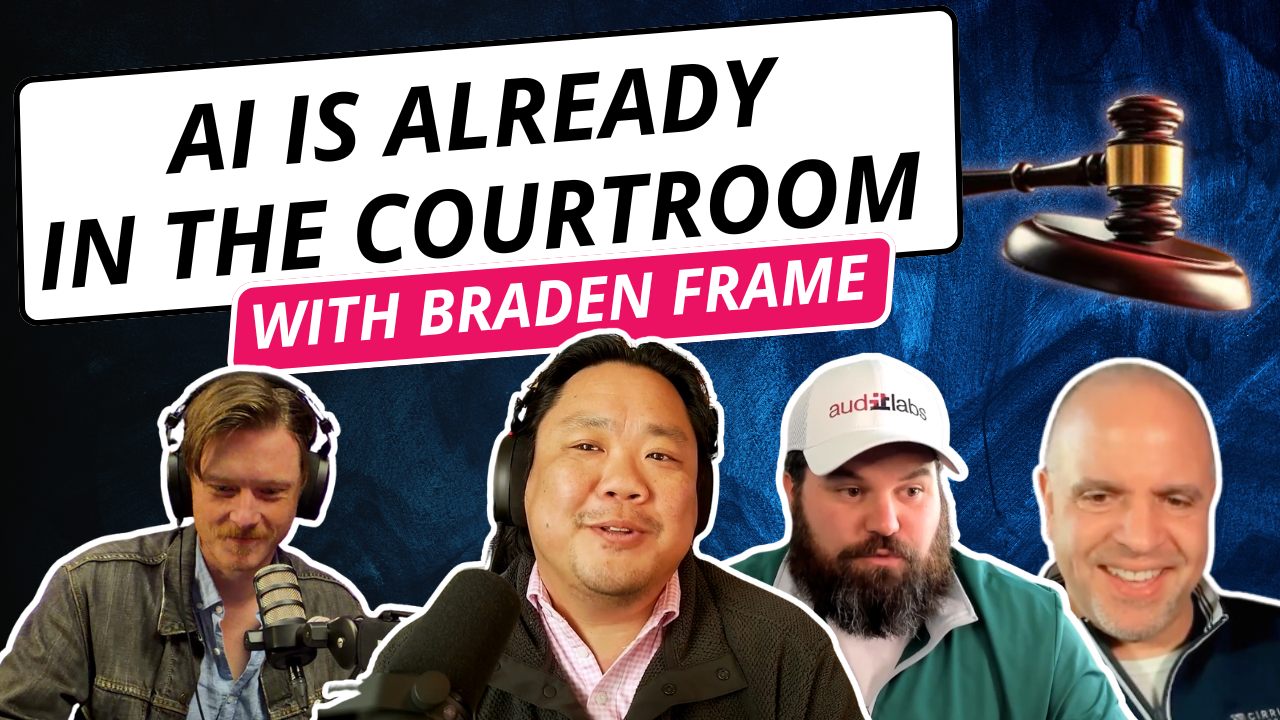
🔗 Ep 89 – AI, Law Enforcement, and the Authenticity War with Braden Frame
Listen wherever you get your podcasts — Subscribe to our YouTube channel to stay up to date on breaking cybersecurity news.
Learn more at www.itauditlabs.com